The real estate & homeowners association industry has many terms and definitions that can confuse people. This is the case for two roles: Community Association Manager vs Property Manager. One common mistake is to believe that a community association manager has the exact same function as a property manager. While some of their tasks may be similar, it is crucial to understand the differences and grasp the specificities of each role. In this post, we will explore these differences by providing examples through infographics, YouTube videos, and more.
Table of Contents
- Community Association Manager
- Property Manager
- Is there a legal recognition of the community association management profession?
- Infographic: CAM VS PM
- Wrapping Up: Community Association Manager vs Property Manager
1. Community Association Manager
What does a community association manager do?
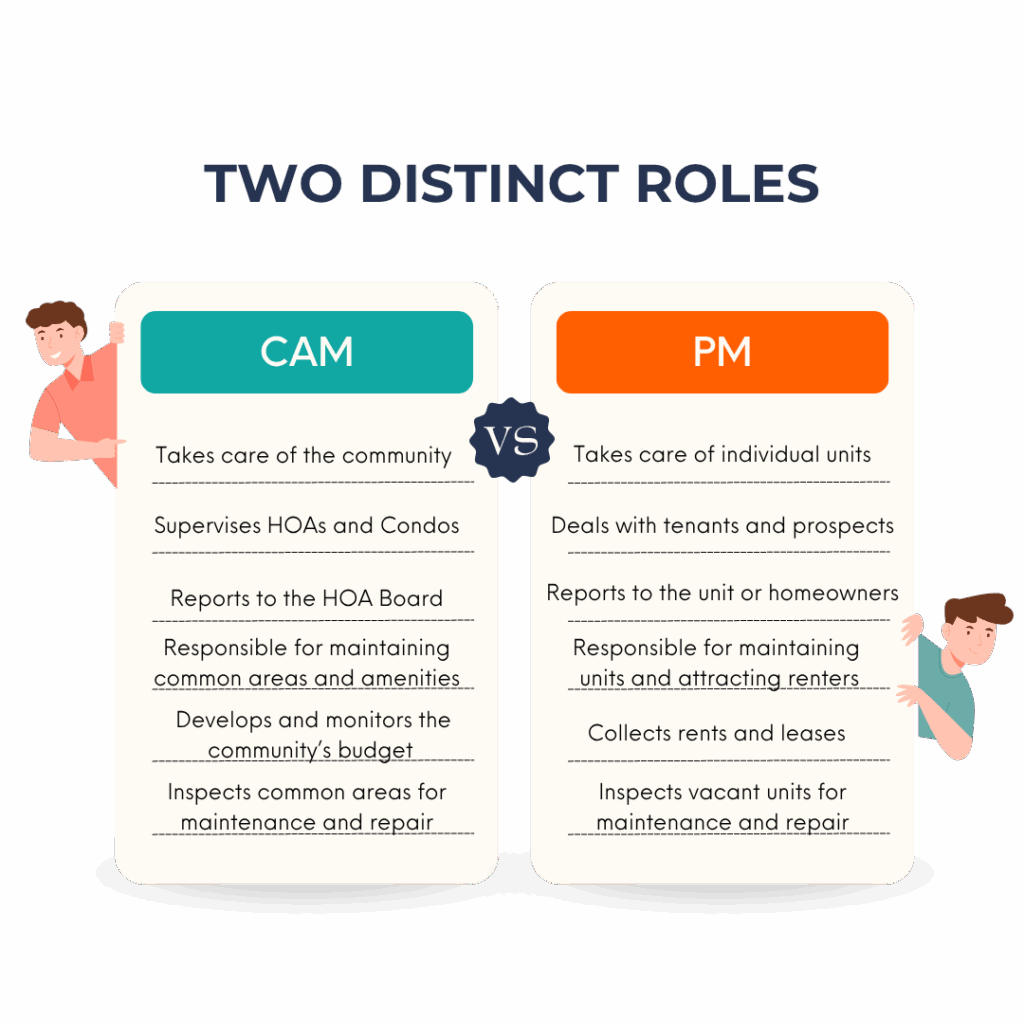
A CAM takes care of the community as a whole. They report to the association’s board of directors, with whom they are regularly in contact. They can supervise all types of community associations, such as:
- Homeowner Associations (HOA)
- Condominiums Associations
- Resort-Lifestyle Communities
What is a community association manager responsible for?
A CAM is in charge of common areas and manages amenities such as swimming pools or fitness centers. Managing amenities means controlling costs, repairs, and maintenance and facilitating access to them. It also means checking reservations, making them easier to reserve, and finding solutions when people regularly miss their bookings.
If the community doesn’t have amenities, it will still have common areas, such as halls, elevators, roads, and sidewalks. Regular maintenance of these common spaces is important to ensure safety and ease of use.
They also check for any violations and follow up on them with residents, along with the board or responsible committee. They also help the board to follow up on residents who haven’t paid their HOA fees and assist with the budget.
A CAM also takes care of landscaping. Ensuring that outdoor spaces are taken care of and will increase property value is crucial to their role.
Their job also includes making sure that the community and its outdoor areas are safe for residents. This is why they often conduct site inspections and prepare emergency preparedness plans.
Depending on the state, they also prepare for potential hurricanes, including conducting inspections of the community to ensure safety. They also raise awareness among residents. If damages were to occur after a hurricane, they would also be in charge of fixing and making repairs in collaboration with the board of directors.
To conduct their daily tasks, CAMs work closely with the board and several vendors, such as landscaping companies, attorneys and accounting firms.

Does a community association manager report to an HOA/Condo Board?
A community manager works directly with the board of directors and reports to them. Residents elect the board of directors regularly. The role of the board is to ensure the community’s well-being in all aspects. It is important to note that a community association manager is not part of the board of directors. However, they work hand in hand, even though the board always has the final say on any decisions.
As a CAM, it’s essential to find the best tools to innovate and streamline your work. One of the most effective ways to achieve this is by using specialized software to deliver a more professional service to your clients. Neigbrs by Vinteum isn’t just another software—it’s the ultimate solution for CAMs, designed to enhance performance, improve efficiency, and help you make the most of your time.
2. Property Manager
What does a property manager do?
A property manager usually deals individually with tenants. The primary objective of this role is to make sure a unit is rented and well-kept. This is why they normally report to the unit or homeowners. They may also work for a property management firm. As opposed to a Community Association Manager, this role doesn’t include taking care of the community as a whole, but instead maintaining individual homes and condos. This is the main and biggest difference between a Property Manager and a Community Association Manager.
What is a property manager responsible for?
A Property Manager is primarily responsible for attracting prospective tenants through marketing techniques and presenting them with available units or homes to turn them into renters. Property managers also spend a lot of their time inspecting vacant units to make sure no damage was done.
They’re also the point of contact when a repair is needed in one unit. For example, if you’re a renter and your washing machine is not working properly, you should call your Property Manager, who will resolve the issue. Community association managers also conduct regular inspections, but they will only inspect common areas. So they wouldn’t check the inside of individual homes. A property manager’s responsibilities also include collecting rent on behalf of the homeowners.
Is there a legal recognition of the community association management profession?
The usual misunderstanding between both roles probably comes from the fact that in most state legislatures, Community Association Managers are licensed as real estate brokers or Property Managers. This leads to the belief that they have the same set of skills.
Although some of their duties can overlap, being a Community Association Manager requires a deep knowledge of running an association, similar to running a full business operation. A Property Manager may not have these skills, so putting both roles in the same bucket is not ideal.
Some organizations, such as the Community Association Institute (CAI), support a regulatory system that provides legal recognition of the Community Association Management profession.
Wrapping Up: Community Association Manager vs Property Manager
Having a website can be beneficial
Whether you work with a Community Association Manager or a Property Manager, having a website can help you manage your assets, increase how many people know about you and improve your transparency. Download our ebook to learn more about how websites can help you.